
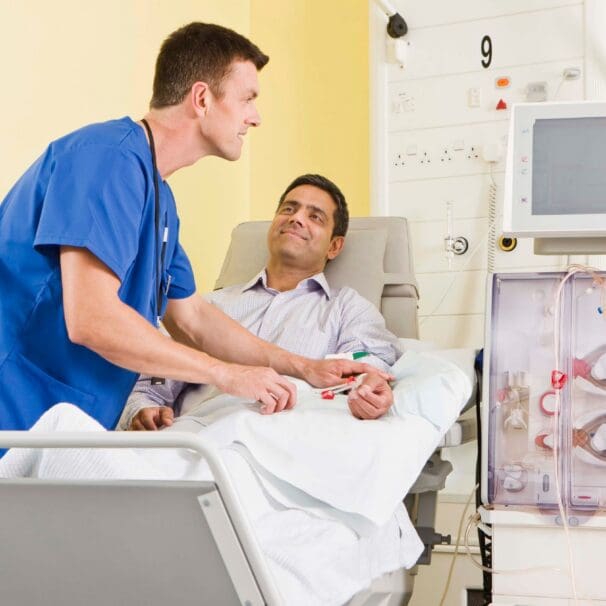
HealthProviders DB is a comprehensive database of healthcare providers, including a complete directory of all Peritoneal Dialysis Registered Nurses.
Registered Nurse Healthcare Taxonomy Code 163WD1100X
As of today, the following are the total number of Peritoneal Dialysis Registered Nurses nationally, in your State, and near your location.
Select a State below to view the list by State. Additionally, you can narrow the list by city, among other options, from the Filter Panel, which you can open by clicking the vertical ellipses ⋮ in the upper right corner of the app.
Alaska – Alabama – Armed Forces Pacific – Arkansas – American Samoa – Arizona – California – Colorado – Connecticut – District of Columbia – Delaware – Florida – Federated States of Micronesia – Georgia – Guam – Hawaii – Iowa – Idaho – Illinois – Indiana – Kansas – Kentucky – Louisiana – Massachusetts – Maryland – Maine – Marshall Islands – Michigan – Minnesota – Missouri – Northern Mariana Islands – Mississippi – Montana – North Carolina – North Dakota – Nebraska – New Hampshire – New Jersey – New Mexico – Nevada – New York – Ohio – Oklahoma – Oregon – Pennsylvania – Puerto Rico – Palau – Rhode Island – South Carolina – South Dakota – Tennessee – Texas – Utah – Virginia – Virgin Islands – Vermont – Washington – Wisconsin – West Virginia – Wyoming
Medicare
The following are the total number of Peritoneal Dialysis Registered Nurses who accept Medicare in your State, the number who have opted out of Medicare, and the total number excluded from participation in Medicare nationwide.
The diagram below shows all the Peritoneal Dialysis Registered Nurses across the country, represented by blue bubbles. The larger the bubble, the greater the concentration of providers in that area. Red bubbles represent Medicare-excluded providers, with the larger bubbles indicating a higher percentage of excluded providers in that region. You can change the bubble size to be based on exclusions from the Size menu.
What do Peritoneal Dialysis Registered Nurses do?
Peritoneal Dialysis (PD) registered nurses teach patients to perform their home dialysis treatments, monitor their health and adherence to the prescribed treatment regimen, manage complications such as infections, and coordinate care with the patient’s healthcare team.
Their duties include patient education, evaluating treatment effectiveness, administering medications, reviewing lab work, and providing ongoing support to help patients manage kidney failure at home.
What they do
Patient Monitoring and Care
Assessing Patient Condition: Nurses assess the patient’s overall health, monitor for signs of complications, and evaluate the patient’s ability to follow the prescribed treatment plan.
Medication Management: They ensure patients receive and take their doctor-prescribed medications accurately and on time.
Monitoring Drainage: Nurses teach patients to monitor the drainage bag for cloudiness, which can indicate an infection.
Lab Work Review: They review the patient’s lab results and home medications, communicating significant changes to the physician.
Complication Management
Early Detection of Peritonitis: PD nurses play a crucial role in identifying peritonitis symptoms, such as severe abdominal pain and cloudy drainage, to prevent severe complications.
Troubleshooting: They provide guidance to patients and care partners for troubleshooting equipment malfunctions or other unexpected issues.
Coordination and Support
Emotional Support: They build strong, supportive relationships with patients, helping them feel confident and empowered to manage their chronic condition.
Care Team Coordination: PD nurses act as a central point of contact, coordinating care between the patient, physician, transplant centers, and other members of the care team.
Training and Education
Teaching PD Procedures: Nurses instruct patients and their caregivers on the different steps of peritoneal dialysis (drain, fill, dwell) using either manual methods or automated cycler machines.
Sterile Technique: A critical part of training involves teaching proper sterile technique to prevent the serious complication of peritonitis (infection of the peritoneal membrane).
Understanding the Equipment: Patients are taught how to use the dialysis machines, understand the dialysate solutions, and manage the access catheter.