
HealthProviders DB is a comprehensive database of healthcare providers, including a complete directory of all Diagnostic Neuroimaging Radiology Physicians.
Radiology Healthcare Taxonomy Code 2085D0003X
As of today, the following are the total number of Diagnostic Neuroimaging Radiology Physicians nationally, in your State, and near your location.
Select a State below to view the list by State. Additionally, you can narrow the list by city, among other options, from the Filter Panel, which you can open by clicking the vertical ellipses ⋮ in the upper right corner of the app.
Alaska – Alabama – Armed Forces Pacific – Arkansas – American Samoa – Arizona – California – Colorado – Connecticut – District of Columbia – Delaware – Florida – Federated States of Micronesia – Georgia – Guam – Hawaii – Iowa – Idaho – Illinois – Indiana – Kansas – Kentucky – Louisiana – Massachusetts – Maryland – Maine – Marshall Islands – Michigan – Minnesota – Missouri – Northern Mariana Islands – Mississippi – Montana – North Carolina – North Dakota – Nebraska – New Hampshire – New Jersey – New Mexico – Nevada – New York – Ohio – Oklahoma – Oregon – Pennsylvania – Puerto Rico – Palau – Rhode Island – South Carolina – South Dakota – Tennessee – Texas – Utah – Virginia – Virgin Islands – Vermont – Washington – Wisconsin – West Virginia – Wyoming
Medicare
The following are the total number of Diagnostic Neuroimaging Radiology Physicians who accept Medicare in your State, the number who have opted out of Medicare, and the total number excluded from participation in Medicare nationwide.
The diagram below shows all the Diagnostic Neuroimaging Radiology Physicians across the country, represented by blue bubbles. The larger the bubble, the greater the concentration of providers in that area. Red bubbles represent Medicare-excluded providers, with the larger bubbles indicating a higher percentage of excluded providers in that region. You can change the bubble size to be based on exclusions from the Size menu.
What do Diagnostic Neuroimaging Radiology Physicians do?
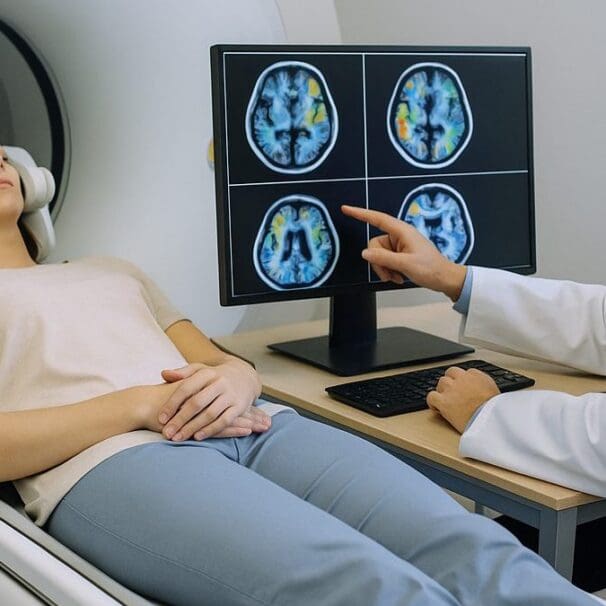
Diagnostic neuroimaging radiologists, or neuroradiologists, specialize in interpreting medical images such as CT and MRI scans to diagnose and treat disorders of the brain, spine, head, and neck.
They use advanced imaging techniques to identify a wide range of neurological conditions, including strokes, tumors, aneurysms, and degenerative diseases.
Beyond diagnosis, neuroradiologists also perform minimally invasive procedures such as biopsies, image-guided injections, and angiograms to help treat patients.
What they do
Diagnosis: They analyze images from various sources, including:
- Computed Tomography (CT) scans
- Magnetic Resonance Images (MRI)
- X-rays
- Angiograms (angiographic studies)
- Myelograms
Condition Identification: They diagnose a broad spectrum of central nervous system and head/neck abnormalities, such as:
- Strokes and cerebrovascular diseases
- Brain tumors and cancer
- Aneurysms
- Epilepsy and seizure disorders
- Degenerative conditions like Alzheimer’s disease
- Trauma to the brain and spine
Consultation: Other physicians, including neurologists and neurosurgeons, consult with neuroradiologists for expertise in interpreting imaging results and developing treatment plans.
Interventional Procedures: Some neuroradiologists perform minimally invasive procedures, often called interventional neuroradiology, which can include:
- Needle biopsies of tumors or lesions
- Image-guided injections
- Angioplasty and stent placement in blood vessels
- Catheter placement
Training and Collaboration
They are board-certified specialists and work as part of multidisciplinary teams to provide comprehensive neurological care.
Neuroradiologists undergo extensive training, including medical school, a 4-year radiology residency, and a 1- or 2-year neuroradiology fellowship.