
HealthProviders DB is a comprehensive database of healthcare providers, including a complete directory of all Dermatopathology Physicians.
Dermatology Healthcare Taxonomy Code 207ND0900X
As of today, the following are the total number of Dermatopathology Physicians nationally, in your State, and near your location.
Select a State below to view the list by State. Additionally, you can narrow the list by city, among other options, from the Filter Panel, which you can open by clicking the vertical ellipses ⋮ in the upper right corner of the app.
Alaska – Alabama – Armed Forces Pacific – Arkansas – American Samoa – Arizona – California – Colorado – Connecticut – District of Columbia – Delaware – Florida – Federated States of Micronesia – Georgia – Guam – Hawaii – Iowa – Idaho – Illinois – Indiana – Kansas – Kentucky – Louisiana – Massachusetts – Maryland – Maine – Marshall Islands – Michigan – Minnesota – Missouri – Northern Mariana Islands – Mississippi – Montana – North Carolina – North Dakota – Nebraska – New Hampshire – New Jersey – New Mexico – Nevada – New York – Ohio – Oklahoma – Oregon – Pennsylvania – Puerto Rico – Palau – Rhode Island – South Carolina – South Dakota – Tennessee – Texas – Utah – Virginia – Virgin Islands – Vermont – Washington – Wisconsin – West Virginia – Wyoming
Medicare
The following are the total number of Dermatopathology Physicians who accept Medicare in your State, the number who have opted out of Medicare, and the total number excluded from participation in Medicare nationwide.
The diagram below shows all the Dermatopathology Physicians across the country, represented by blue bubbles. The larger the bubble, the greater the concentration of providers in that area. Red bubbles represent Medicare-excluded providers, with the larger bubbles indicating a higher percentage of excluded providers in that region. You can change the bubble size to be based on exclusions from the Size menu.
What do Dermatopathology Physicians do?
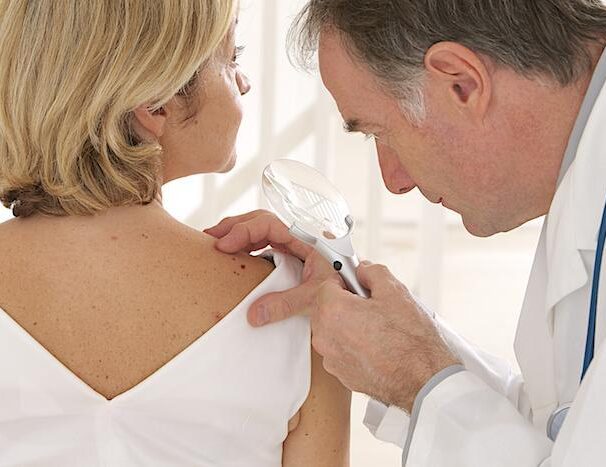
Dermatopathology physicians analyze skin, hair, and nail tissue samples under a microscope to diagnose skin diseases, such as skin cancer, eczema, and psoriasis.
They combine expertise in dermatology (skin) and pathology (disease) to interpret cellular changes, identify disease patterns, and provide accurate diagnoses that guide patient treatment.
They work collaboratively with dermatologists and other medical professionals by providing crucial diagnostic information from biopsies.
What they do
Diagnose diseases: They examine biopsies and tissue samples to identify a wide range of conditions, from common rashes to complex skin cancers and genetic disorders.
Analyze tissues: Using methods such as light microscopy and electron microscopy, they inspect cellular structures and search for disease markers.
Collaborate with dermatologists: They work closely with other physicians to confirm diagnoses, interpret complex cases, and help develop treatment plans for patients.
Support patient care: By providing precise diagnoses, dermatopathologists ensure patients receive appropriate, timely treatment for their condition.
Conduct research: They advance skin health by studying the causes of skin diseases and developing new treatments.
Why their work is essential
Accurate diagnosis is key: Correctly identifying skin conditions is crucial for determining the right course of treatment.
Detects life-threatening diseases: Their work is vital for early and accurate diagnosis of skin cancers, including melanoma.
Provides in-depth understanding: Dermatopathologists offer detailed, microscopic insights that aren’t visible during a standard clinical examination.