
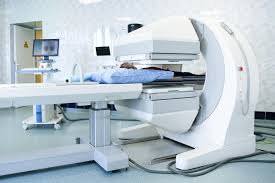
HealthProviders DB is a comprehensive database of healthcare providers, including a complete directory of all Nuclear Cardiology Physicians.
Nuclear Medicine Healthcare Taxonomy Code 207UN0901X
As of today, the following are the total number of Nuclear Cardiology Physicians nationally, in your State, and near your location.
Select a State below to view the list by State. Additionally, you can narrow the list by city, among other options, from the Filter Panel, which you can open by clicking the vertical ellipses ⋮ in the upper right corner of the app.
Alaska – Alabama – Armed Forces Pacific – Arkansas – American Samoa – Arizona – California – Colorado – Connecticut – District of Columbia – Delaware – Florida – Federated States of Micronesia – Georgia – Guam – Hawaii – Iowa – Idaho – Illinois – Indiana – Kansas – Kentucky – Louisiana – Massachusetts – Maryland – Maine – Marshall Islands – Michigan – Minnesota – Missouri – Northern Mariana Islands – Mississippi – Montana – North Carolina – North Dakota – Nebraska – New Hampshire – New Jersey – New Mexico – Nevada – New York – Ohio – Oklahoma – Oregon – Pennsylvania – Puerto Rico – Palau – Rhode Island – South Carolina – South Dakota – Tennessee – Texas – Utah – Virginia – Virgin Islands – Vermont – Washington – Wisconsin – West Virginia – Wyoming
Medicare & Medicaid Exclusions
The following are the total number of Nuclear Cardiology Physicians who accept Medicare in your State, the number who have opted out of Medicare, and the total number excluded from participation in Medicare nationwide.
The diagram below shows all the Nuclear Cardiology Physicians across the country, represented by blue bubbles. The larger the bubble, the greater the concentration of providers in that area. Red bubbles represent Medicare-excluded providers, with the larger bubbles indicating a higher percentage of excluded providers in that region. You can change the bubble size to be based on exclusions from the Size menu.
What do Nuclear Cardiology Physicians do?
Nuclear cardiology physicians use radioactive tracers and advanced imaging techniques to diagnose and manage heart conditions.
They interpret images from procedures such as myocardial perfusion imaging (MPI), PET scans, and MUGA scans to assess blood flow and heart muscle pumping function, and to detect damage from heart attacks.
These physicians help diagnose diseases such as coronary artery disease and heart failure, evaluate treatment effectiveness, and predict the risk of future cardiac events.
What they do
Diagnosing heart conditions involves using imaging to identify diseases like coronary artery disease, heart failure, and damage from heart attacks.
Assess heart function: They evaluate how well the heart muscle is pumping and how well blood is flowing through the heart, using tests like nuclear stress tests and MUGA scans.
Evaluate treatment effectiveness: They can check if treatments, such as procedures to open blocked arteries, are working correctly.
Predict risk: They help predict the risk of future heart attacks or other cardiac events.
Interpret medical images: After a patient receives a radioactive tracer injection and the photos are captured with a gamma camera, the physician interprets the images to establish a diagnosis.
Common procedures
Cardiac SPECT (Single-Photon Emission Computed Tomography): A standard nuclear imaging modality that uses a specialized camera to create 3D images of the heart.
Myocardial Perfusion Imaging (MPI): Often called a nuclear stress test, this shows blood flow to the heart muscle and how well the heart is pumping.
Positron Emission Tomography (PET): This non-invasive procedure provides information on the heart’s blood supply and metabolic activity.
Multi-gated Acquisition (MUGA) Scan: Also known as a radionuclide angiography, this measures the pumping function of the heart’s ventricles.