
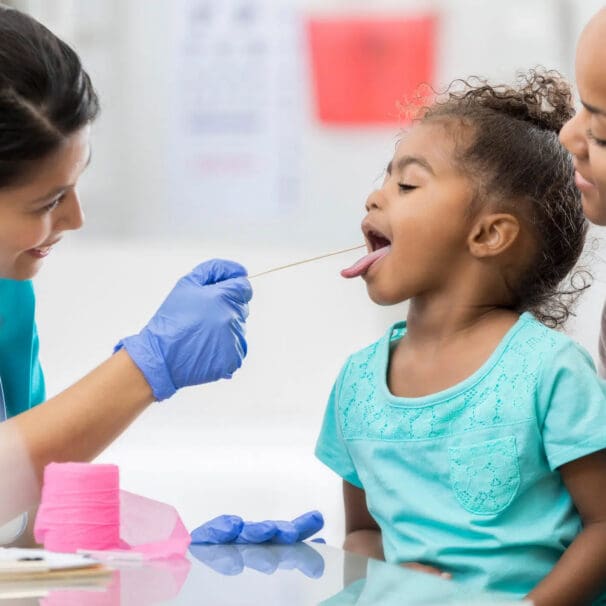
HealthProviders DB is a comprehensive database of healthcare providers, including a complete directory of all Infectious disease pediatricians.
Pediatrics Healthcare Taxonomy Code 2080P0208X
As of today, the following are the total number of Infectious Disease pediatricians nationally, in your State, and near your location.
Select a State below to view the list by State. Additionally, you can narrow the list by city, among other options, from the Filter Panel, which you can open by clicking the vertical ellipses ⋮ in the upper right corner of the app.
Alaska – Alabama – Armed Forces Pacific – Arkansas – American Samoa – Arizona – California – Colorado – Connecticut – District of Columbia – Delaware – Florida – Federated States of Micronesia – Georgia – Guam – Hawaii – Iowa – Idaho – Illinois – Indiana – Kansas – Kentucky – Louisiana – Massachusetts – Maryland – Maine – Marshall Islands – Michigan – Minnesota – Missouri – Northern Mariana Islands – Mississippi – Montana – North Carolina – North Dakota – Nebraska – New Hampshire – New Jersey – New Mexico – Nevada – New York – Ohio – Oklahoma – Oregon – Pennsylvania – Puerto Rico – Palau – Rhode Island – South Carolina – South Dakota – Tennessee – Texas – Utah – Virginia – Virgin Islands – Vermont – Washington – Wisconsin – West Virginia – Wyoming
Medicare & Medicaid Exclusions
The following are the total number of Infectious Diseases Pediatricians who accept Medicare in your State, the number who have opted out of Medicare, and the total number excluded from participation in Medicare nationwide.
The diagram below shows all the Infectious disease pediatricians across the country, represented by blue bubbles. The larger the bubble, the greater the concentration of providers in that area. Red bubbles represent Medicare-excluded providers, with the larger bubbles indicating a higher percentage of excluded providers in that region. You can change the bubble size to be based on exclusions from the Size menu.
What do Infectious Diseases Pediatricians do?
Infectious disease pediatricians diagnose, treat, and prevent a wide range of bacterial, viral, fungal, and parasitic infections in children.
They handle complex or unusual illnesses, such as recurrent fevers, bone infections, and those acquired through travel, and also work in areas such as infection control, antimicrobial stewardship, and the development of treatment protocols.
They act like medical detectives to identify the causes of infections from viruses, bacteria, fungi, or parasites, and to manage conditions such as pneumonia, meningitis, and HIV.
They also work on infection control, public health initiatives, and improving the use of antimicrobial medications.
What they do
Diagnose and treat complicated infections: They handle serious or complex infections that may be beyond the scope of a general pediatrician.
Investigate unusual cases: They are experts at diagnosing conditions with recurrent, atypical, or unexplained symptoms and fevers.
Treat various infections: They have expertise in a wide range of infectious and immunologic diseases, including those caused by bacteria, viruses, fungi, and parasites.
Manage specific conditions: They treat a variety of particular illnesses, such as bone and joint infections, Lyme disease, tuberculosis, and HIV.
Work with immunocompromised children: They provide care for children with weakened immune systems, including those with primary immune deficiencies or those who are about to undergo a transplant.
Focus on infection prevention: They help prevent infections among high-risk patients and support strategies for infection control in hospitals and communities.
Work in different settings: Their work occurs in both outpatient clinics and inpatient hospital environments.
They play roles in public health and policy, being involved in global health initiatives and healthcare administration.
Specialized knowledge
Treat children in a child-friendly manner: They are trained to examine and treat children in ways that make them feel more relaxed and cooperative.
Understand unique pediatric needs: They recognize that a child’s body is different from an adult’s and understand that infectious diseases present uniquely in children.