
HealthProviders DB is a comprehensive database of healthcare providers, including a complete directory of all Otology & Neurotology Physicians.
Otolaryngology Healthcare Taxonomy Code 207YX0901X
As of today, the following are the total number of Otology & Neurotology Physicians nationally, in your State, and near your location.
Select a State below to view the list by State. Additionally, you can narrow the list by city, among other options, from the Filter Panel, which you can open by clicking the vertical ellipses ⋮ in the upper right corner of the app.
Alaska – Alabama – Armed Forces Pacific – Arkansas – American Samoa – Arizona – California – Colorado – Connecticut – District of Columbia – Delaware – Florida – Federated States of Micronesia – Georgia – Guam – Hawaii – Iowa – Idaho – Illinois – Indiana – Kansas – Kentucky – Louisiana – Massachusetts – Maryland – Maine – Marshall Islands – Michigan – Minnesota – Missouri – Northern Mariana Islands – Mississippi – Montana – North Carolina – North Dakota – Nebraska – New Hampshire – New Jersey – New Mexico – Nevada – New York – Ohio – Oklahoma – Oregon – Pennsylvania – Puerto Rico – Palau – Rhode Island – South Carolina – South Dakota – Tennessee – Texas – Utah – Virginia – Virgin Islands – Vermont – Washington – Wisconsin – West Virginia – Wyoming
Medicare & Medicaid Exclusions
The following are the total number of Otology & Neurotology Physicians who accept Medicare in your State, the number who have opted out of Medicare, and the total number excluded from participation in Medicare nationwide.
The diagram below shows all the Acupuncturists across the country, represented by blue bubbles. The larger the bubble, the greater the concentration of providers in that area. Red bubbles represent Medicare-excluded providers, with the larger bubbles indicating a higher percentage of excluded providers in that region. You can change the bubble size to be based on exclusions from the Size menu.
What do Otology & Neurotology Physicians do?
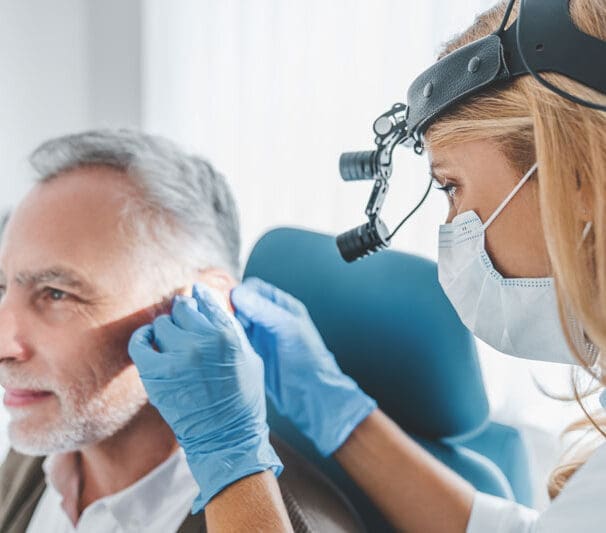
Otology and neurotology physicians are medical doctors who specialize in the medical and surgical treatment of ear, hearing, balance, and related skull base conditions.
They diagnose and treat complex ear diseases, hearing loss, dizziness, and tumors of the ear and skull base, using techniques such as microsurgery, reconstructive surgery, and implantable hearing devices.
Neurotology focuses specifically on complex disorders involving the nerves, tumors, and cerebrospinal fluid leaks near the ear and the skull base.
What they do
- Provide medical and surgical care for both adult and pediatric patients.
- Perform a range of surgical procedures, such as eardrum repair (tympanoplasty), middle ear microsurgery, and stapes surgery.
- Fit and manage implantable hearing devices, including cochlear implants and osseointegrated hearing implants.
- Manage complex neurological and skull base disorders that affect the ear and its related structures.
- Use advanced diagnostic tools and techniques, such as microsurgery and minimally invasive endoscopic procedures.
What they treat
Hearing loss: This includes conditions that can be improved with implantable hearing devices.
Complex ear diseases include chronic ear infections, cholesteatoma, and eardrum ruptures.
Dizziness and balance disorders: Including vertigo and other vestibular disorders.
Tumors: Both in and near the ear, like acoustic neuromas, which can be treated with surgery or radiosurgery.
Other conditions: Including tinnitus, facial nerve disorders, and congenital ear malformations.