
HealthProviders DB is a comprehensive database of healthcare providers, including a complete directory of all Radiology and Podiatry providers.
Podiatrist Healthcare Taxonomy Code 213ER0200X
As of today, the following are the total number of Radiology Podiatrists nationally, in your State, and near your location.
Select a State below to view the list by State. Additionally, you can narrow the list by city, among other options, from the Filter Panel, which you can open by clicking the vertical ellipses ⋮ in the upper right corner of the app.
Alaska – Alabama – Armed Forces Pacific – Arkansas – American Samoa – Arizona – California – Colorado – Connecticut – District of Columbia – Delaware – Florida – Federated States of Micronesia – Georgia – Guam – Hawaii – Iowa – Idaho – Illinois – Indiana – Kansas – Kentucky – Louisiana – Massachusetts – Maryland – Maine – Marshall Islands – Michigan – Minnesota – Missouri – Northern Mariana Islands – Mississippi – Montana – North Carolina – North Dakota – Nebraska – New Hampshire – New Jersey – New Mexico – Nevada – New York – Ohio – Oklahoma – Oregon – Pennsylvania – Puerto Rico – Palau – Rhode Island – South Carolina – South Dakota – Tennessee – Texas – Utah – Virginia – Virgin Islands – Vermont – Washington – Wisconsin – West Virginia – Wyoming
Medicare & Medicaid Exclusions
The following are the total number of Radiology Podiatrists who accept Medicare in your State, the number who have opted out of Medicare, and the total number excluded from participation in Medicare nationwide.
The diagram below shows all the Radiology Podiatrists across the country, represented by blue bubbles. The larger the bubble, the greater the concentration of providers in that area. Red bubbles represent Medicare-excluded providers, with the larger bubbles indicating a higher percentage of excluded providers in that region. You can change the bubble size to be based on exclusions from the Size menu.
What do Radiology Podiatrists do?
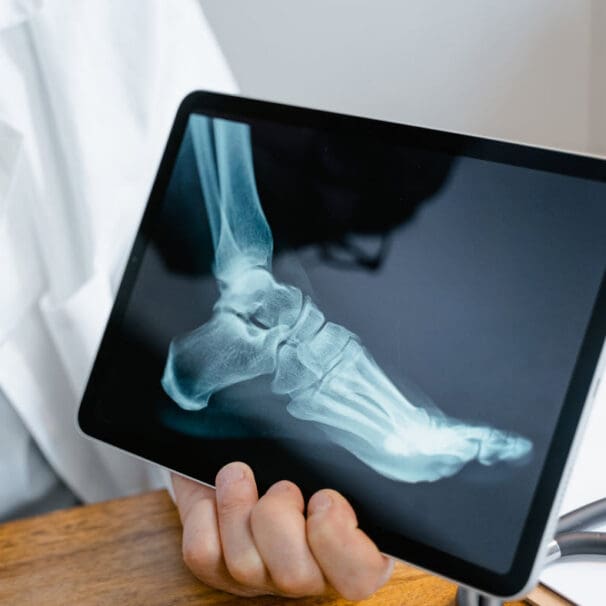
Radiology podiatrists use various imaging techniques, such as X-rays, CT scans, MRIs, and ultrasounds, to diagnose and treat conditions affecting the feet and ankles.
They interpret these images to detect internal structures such as bones, joints, muscles, ligaments, and tendons, which helps determine fractures, deformities, soft-tissue injuries, arthritis, or infections.
This diagnostic information is crucial for developing accurate treatment plans.
What they do
Diagnostic Imaging: They use X-rays for bones, ultrasounds for soft tissues such as ligaments and tendons, and MRIs for highly detailed views of both bone and soft tissue.
Diagnosis: Imaging is used to detect fractures, bunions, arthritis, and soft-tissue tears.
Treatment Planning: After diagnosing an issue, they use the imaging results to create a specific treatment plan, which may include surgery or other procedures.
Monitoring: Imaging techniques can be used to monitor the progress of a treatment and ensure it is working effectively.
Identifying Foreign Objects: They use imaging to locate foreign objects, like glass or splinters, lodged in the foot.
Guiding Injections: Ultrasound can more accurately guide injections to a specific area.