
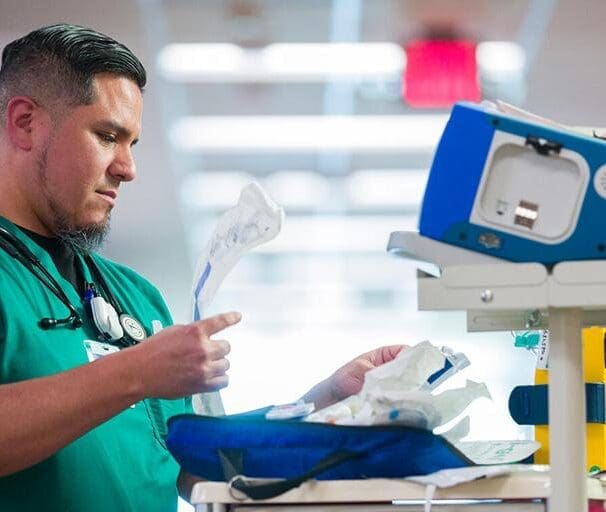
HealthProviders DB is a comprehensive database of healthcare providers, including a complete directory of all Pulmonary Diagnostics Registered Respiratory Therapists.
Registered Respiratory Therapist Healthcare Taxonomy Code 2279P1004X
As of today, the following are the total number of Pulmonary Diagnostics Registered Respiratory Therapists nationally, in your State, and near your location.
Select a State below to view the list by State. Additionally, you can narrow the list by city, among other options, from the Filter Panel, which you can open by clicking the vertical ellipses ⋮ in the upper right corner of the app.
Alaska – Alabama – Armed Forces Pacific – Arkansas – American Samoa – Arizona – California – Colorado – Connecticut – District of Columbia – Delaware – Florida – Federated States of Micronesia – Georgia – Guam – Hawaii – Iowa – Idaho – Illinois – Indiana – Kansas – Kentucky – Louisiana – Massachusetts – Maryland – Maine – Marshall Islands – Michigan – Minnesota – Missouri – Northern Mariana Islands – Mississippi – Montana – North Carolina – North Dakota – Nebraska – New Hampshire – New Jersey – New Mexico – Nevada – New York – Ohio – Oklahoma – Oregon – Pennsylvania – Puerto Rico – Palau – Rhode Island – South Carolina – South Dakota – Tennessee – Texas – Utah – Virginia – Virgin Islands – Vermont – Washington – Wisconsin – West Virginia – Wyoming
Medicare & Medicaid Exclusions
The following are the total number of Pulmonary Diagnostics Registered Respiratory Therapists who accept Medicare in your State, the number who have opted out of Medicare, and the total number excluded from participation in Medicare nationwide.
The diagram below shows all the Pulmonary Diagnostics Registered Respiratory Therapists across the country, represented by blue bubbles. The larger the bubble, the greater the concentration of providers in that area. Red bubbles represent Medicare-excluded providers, with the larger bubbles indicating a higher percentage of excluded providers in that region. You can change the bubble size to be based on exclusions from the Size menu.
What do Pulmonary Diagnostics Registered Respiratory Therapists do?
Pulmonary Diagnostics Registered Respiratory Therapists specialize in performing tests that assess lung function and diagnose breathing and cardiopulmonary disorders, such as asthma or COPD.
They operate specialized equipment to measure lung capacity, administer pulmonary function tests, and interpret results to help physicians develop treatment plans and monitor patient progress.
What they do
Administer Diagnostic Tests: Conduct various tests, including pulmonary function tests (PFTs) to measure lung volume and how well the lungs move air.
Operate specialized equipment, such as spirometers, to measure airflow and volume, and perform tests like gas diffusion studies to assess gas transfer in the lungs.
Interpret Test Results: Analyze test data to help physicians determine the type and progression of lung diseases and assess the effectiveness of treatments.
Consult with Physicians: Collaborate with doctors to understand patient conditions and discuss appropriate diagnostic and treatment strategies.
Monitor Patient Progress: Track patients’ conditions and responses to treatments, documenting notes to share with the medical team.
Educate Patients and Families: Explain lung conditions, test procedures, and disease management strategies to patients and their families, improving understanding and compliance.
Work in Specialized Settings: Work in hospital cardiopulmonary labs, outpatient clinics, and other settings focused on the diagnosis and treatment of lung disorders.
Common Conditions They Help Diagnose Asthma, Chronic Obstructive Pulmonary Disease (COPD), Cystic Fibrosis, and Other Chronic Lung Diseases.
What They Measure
Oxygen and Carbon Dioxide Levels: By performing tests like arterial blood gases (ABGs).
Lung Capacity: How much air the lungs can hold.
Airflow and Lung Function: The speed and volume of air inhaled and exhaled.