
HealthProviders DB is a comprehensive database of healthcare providers, including a complete directory of all Compounded Sterile Preparations Pharmacists.
Pharmacist Healthcare Taxonomy Code 1835C0207X
As of today, the following are the total number of Compounded Sterile Preparations Pharmacists nationally, in your State, and near your location.
Select a State below to view the list by State. Additionally, you can narrow the list by city, among other options, from the Filter Panel, which you can open by clicking the vertical ellipses ⋮ in the upper right corner of the app.
Alaska – Alabama – Armed Forces Pacific – Arkansas – American Samoa – Arizona – California – Colorado – Connecticut – District of Columbia – Delaware – Florida – Federated States of Micronesia – Georgia – Guam – Hawaii – Iowa – Idaho – Illinois – Indiana – Kansas – Kentucky – Louisiana – Massachusetts – Maryland – Maine – Marshall Islands – Michigan – Minnesota – Missouri – Northern Mariana Islands – Mississippi – Montana – North Carolina – North Dakota – Nebraska – New Hampshire – New Jersey – New Mexico – Nevada – New York – Ohio – Oklahoma – Oregon – Pennsylvania – Puerto Rico – Palau – Rhode Island – South Carolina – South Dakota – Tennessee – Texas – Utah – Virginia – Virgin Islands – Vermont – Washington – Wisconsin – West Virginia – Wyoming
Medicare & Medicaid Exclusions
The following are the total number of Compounded Sterile Preparations Pharmacists who accept Medicare in your State, the number who have opted out of Medicare, and the total number excluded from participation in Medicare nationwide.
The diagram below shows all the Compounded Sterile Preparations Pharmacists across the country, represented by blue bubbles. The larger the bubble, the greater the concentration of providers in that area. Red bubbles represent Medicare-excluded providers, with the larger bubbles indicating a higher percentage of excluded providers in that region. You can change the bubble size to be based on exclusions from the Size menu.
What do Compounded Sterile Preparations Pharmacists do?
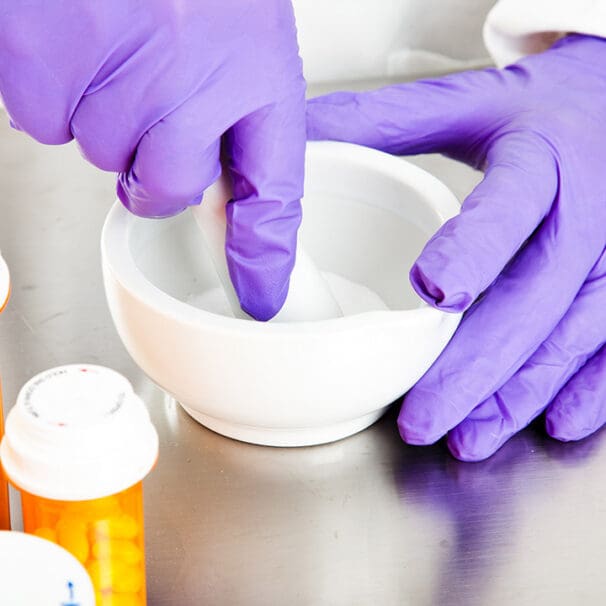
Compounded Sterile Preparation (CSP) Pharmacists ensure patient safety and medication quality by overseeing the creation of custom sterile medications in a cleanroom environment.
Their duties include maintaining sterile conditions, validating the quality of ingredients and the final product, complying with regulations, and training staff to prevent contamination, errors, and adverse patient outcomes from intravenous (IV) infusions, injections, or ophthalmic preparations.
What they do
Quality Control & Safety: Compounded Sterile Preparation Pharmacists are responsible for ensuring that all sterile preparations meet rigorous quality, safety, and environmental control standards.
Regulatory Compliance: They must ensure that all preparation, storage, and transportation of CSPs adhere to federal, state, and institutional regulations and guidelines.
Staff Training & Validation: Pharmacists train and validate the skills of other personnel, such as pharmacy technicians, who perform the actual sterile compounding tasks.
Environmental Monitoring: They monitor and ensure the appropriate conditions within the cleanroom, including temperature, humidity, air pressure, and ventilation.
Product Integrity: Pharmacists oversee the entire process to ensure that compounded preparations contain the correct ingredients, are free from contaminants, and have the proper strength and stability.
Risk Mitigation: Given that CSPs are often administered directly into the bloodstream, eyes, or body tissues, pharmacists work to mitigate the high risks associated with contamination and errors.
Environment
Hospitals: Many CSP pharmacists work in hospital settings, preparing medications for inpatients.
Home Infusion Centers: They also operate specialized centers that prepare and deliver sterile medications to patients receiving care at home.
Compounding Facilities: Independent compounding pharmacies also employ these pharmacists to prepare custom medications for patients.
Why Their Work is Crucial
Preventing Harm: Strict adherence to sterile compounding standards and oversight by specialized pharmacists help prevent microbial contamination and ensure patient safety.
Patient-Specific Needs: CSPs are often needed for patients with allergies, specific dosing requirements, or those who cannot take commercially available medications.
High-Risk Preparations: These custom medications can carry hazardous ingredients or be administered via routes that provide immediate effects, such as IVs, making precision critical.